01 / Closeout
Property Closed Claim Report
Pair loss assessments, repair estimates, receipts, photos, and communication records into one completed-work record.
Review Property Closed Claim Report$39 ↗For partners / Roofing & restoration professionals
After a hail or catastrophe loss, the homeowner and contractor can be left sorting through disputed scope, carrier cost controls, and a settlement that does not reflect the documented repair story. ClaimStinger keeps the work and communication together.
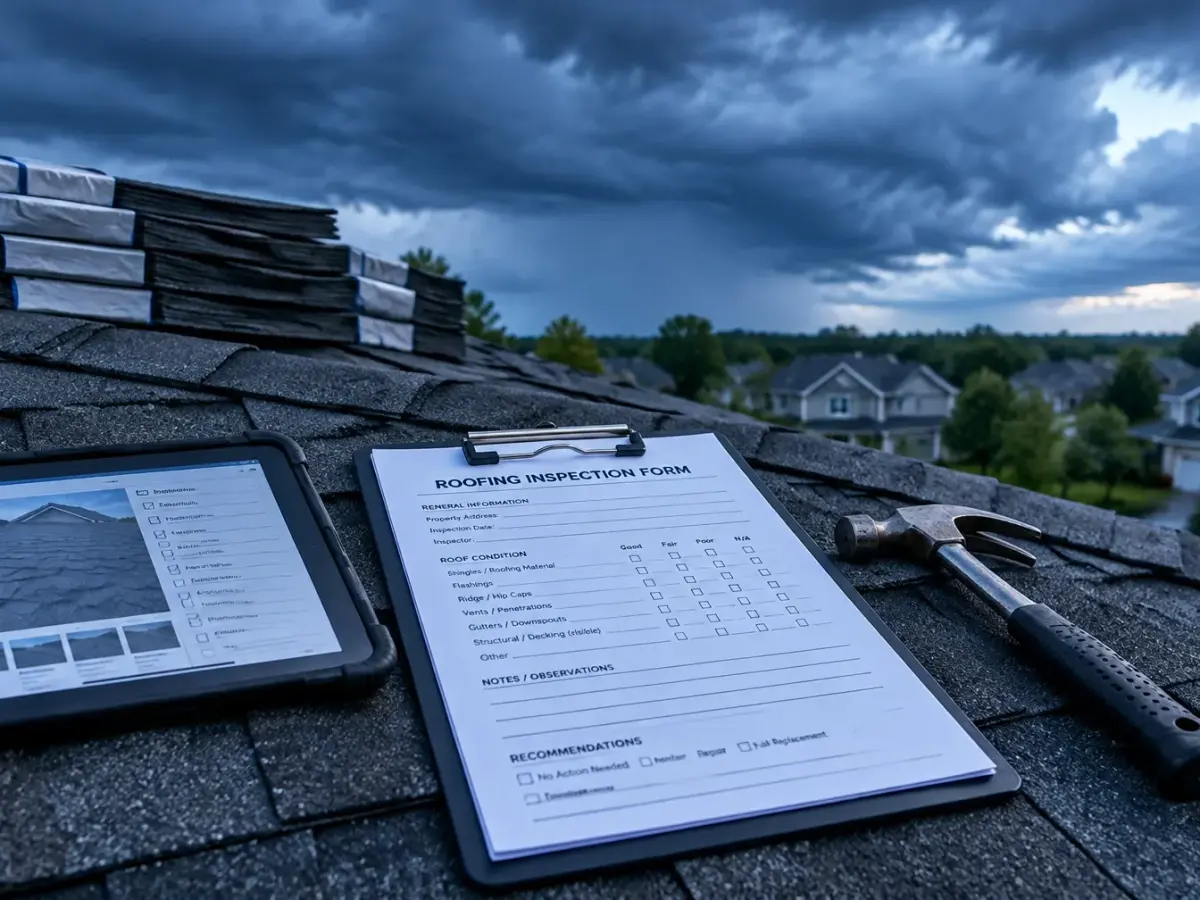
The exposure
A project can involve loss assessments, estimates, supplements, receipts, photographs, and many messages. If the work is complete but the record is not, the contractor and homeowner have less context when an unsatisfactory settlement or total-loss determination needs to be reviewed.
What ClaimStinger documents
Each report keeps the relevant photos, details, and supporting documents together so the next conversation has a clear starting point.
01 / Closeout
Pair loss assessments, repair estimates, receipts, photos, and communication records into one completed-work record.
Review Property Closed Claim Report$39 ↗02 / Hail record
Use the initial estimate record for hail or structural documentation when the first visible loss details need to be captured clearly.
Review Initial Collision Estimate$89 ↗03 / Review
Keep the property documentation needed to review an unsatisfactory total-loss determination without asserting a specific state threshold.
Review Total Loss Dispute$39 ↗What it changes
01
The completed-work record shows the loss, the repair path, the receipts, and the communication in one place.
02
The contractor can keep the project moving while giving the homeowner documentation to review with the carrier.
03
The repair stays connected to the contractor’s work record when scope, supplements, or a total-loss decision are questioned.
Use the state guide for the state rule
Total-loss decisions, repair obligations, and related property rules vary by state. Review the existing guides for Colorado, Texas, Minnesota, and Missouri before relying on a state-specific claim.
How it works
A partner chooses the moment, sends a link, and keeps the resulting record connected to the client conversation.
01 / Document the loss
Record the property condition, loss assessment, and early estimate details before the project moves on.
02 / Complete the work
Gather photos, receipts, estimates, supplements, and communication as the repair progresses.
03 / Close the file
Bring the supporting record together in a Property Closed Claim Report.
04 / Hand it over
Share the completed record so the homeowner has a clear file for the next claim conversation.
Questions partners ask
A contractor can choose to offer a report on every job or use it for the projects where a dated loss, repair, and closeout record is especially useful.
The homeowner receives access to the report and its supporting record by email, including the documented loss, repair details, receipts, photos, and relevant communication collected for the file.
It does not decide a supplement. It helps keep the observations, estimates, receipts, photos, and communication organized so the people reviewing the scope have a clearer record.
No. It organizes the documentation needed to review the question. State-specific concepts vary, so start with the existing Colorado, Texas, Minnesota, or Missouri guides before making a state-specific assertion.
Talk to ClaimStinger
Tell us what your team needs to document, protect, or hand back to the client. We can talk through the partner workflow and the report that fits the moment.